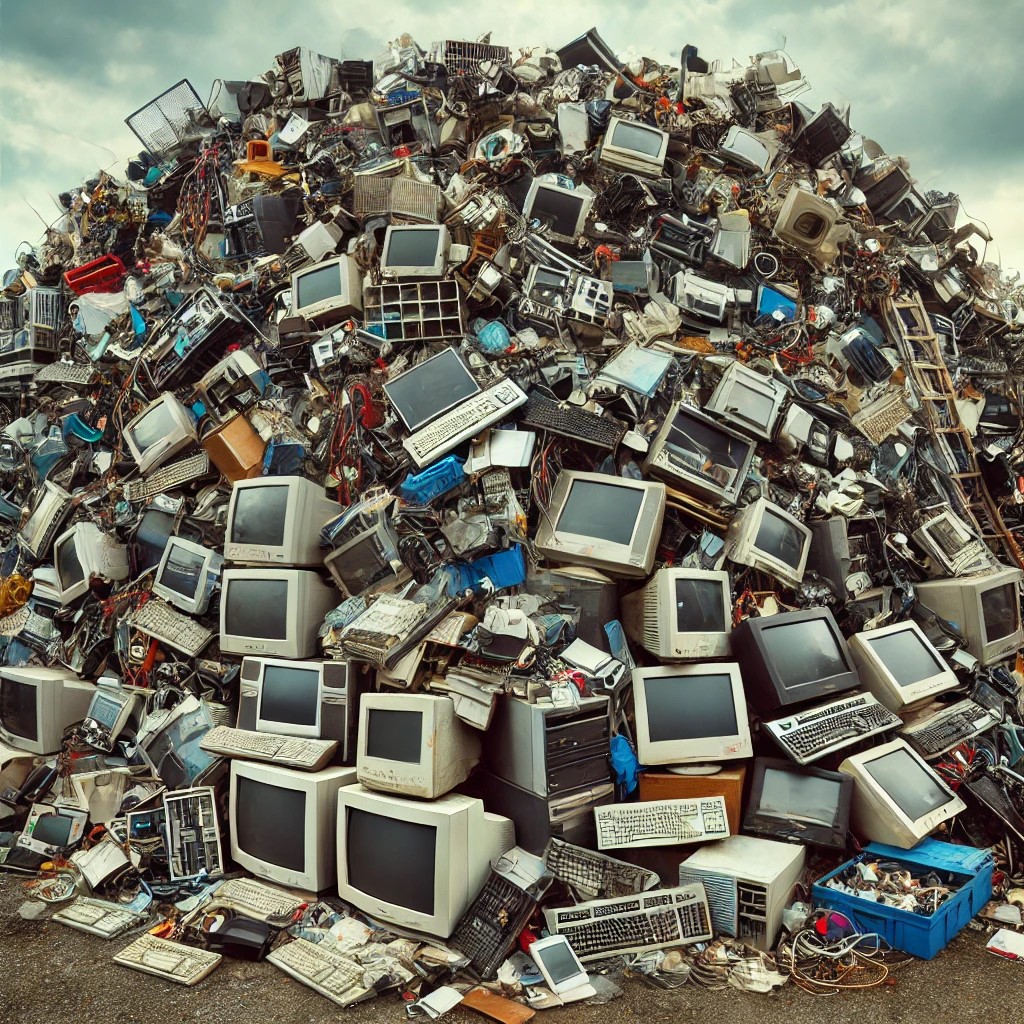
Worldwide, the annual generation of Waste Electrical and Electronic Equipment (WEEE) is rising by 2.6 million tonnes annually, on track to reach 82 million tonnes by 2030, a further 33% increase from the 2022 figure. According to the Global E-waste Monitor published by the International Telecommunication Union (ITU) in 2023, the generation rate of WEEE increased from 300,000 to 430,000 tons per year in the EAC. The East Africa community e-waste waste management is guided by a five-year strategy the EACO regional e-waste strategy.
WEEE Classification
Temperature Exchange Equipment
Refrigerators, freezers, air conditioners, dehumidifiers, oil radiators and heat pumps.
Large equipment
Washing machines, clothes dryers, electric hot plates, electric stoves, coin slot machines, large medical devices, and equipment for reproducing sound or images.
Screen and Monitors
Computer monitors, televisions, laptops, LCD photo frames or any device with a digital screen surface area >100 square centimeters.
Small Equipment
Vacuum cleaners, sewing machines, smoke detectors, electric shavers, electric kettles, electronic toys, microwave ovens, calculators, video cameras and musical instruments.
Large equipment
Lamps
Fluorescent lamps, pressure sodium lamps, metal halide lamps, low-pressure sodium lamps and LED lamps.
Screen and Monitors
Computer monitors, televisions, laptops, LCD photo frames or any device with a digital screen surface area greater than 100 square centimeters.